In this article10 sections
- What Is a Party Wall?
- What Work Needs a Party Wall Notice?
- How the Party Wall Process Works
- Who Pays for a Party Wall Agreement?
- How It Fits Into Your Project
- Which Projects Usually Need a Notice?
- What Happens if You Do Not Serve Notice?
- Five Ways to Keep It Neighbourly
- How Godman Construction Can Help
- Frequently Asked Questions
If your building work touches a wall you share with a neighbour, or involves digging near their house, the law requires you to tell them before you start. The rules are set out in the Party Wall etc. Act 1996, and the arrangement you reach is what most people call a party wall agreement.
It sounds daunting, and it is one of the parts of a project that homeowners worry about most. In practice the process is straightforward if you understand it and start early. This guide explains when the Act applies, what you have to do, and how to fit it into the plan for your extension or loft conversion.
The Act applies throughout England and Wales. This article is a general guide, not legal advice, and a party wall surveyor can advise on your own situation.
What Is a Party Wall?
A party wall is a wall that stands on the land of two or more owners. The most familiar example is the wall between two semi-detached or terraced houses. The Act also covers:
- party structures, such as the floors and walls that separate flats
- party fence walls, which are garden walls built astride a boundary. Wooden fences are not included.
The Act uses two terms throughout. You, the person carrying out the work, are the building owner. Your neighbour is the adjoining owner.
What Work Needs a Party Wall Notice?
The Act covers three kinds of work.
| Type of work | Typical examples | Minimum notice |
|---|---|---|
| Work to an existing party wall | Cutting in to support a beam, removing a chimney breast, raising or underpinning the wall | Two months |
| A new wall at the boundary | Building the wall of an extension up to or astride the boundary line | One month |
| Excavation near a neighbouring building | Digging foundations for an extension | One month |
Work to an existing party wall
Common examples include cutting into the wall to take the bearing of a beam, which is what happens in most loft conversions, inserting a damp-proof course, raising the height of the wall, underpinning it, or repairing it.
New walls at the boundary
If you want to build a new wall up to the boundary line, or astride it, you must give notice. A wall can only be built astride the boundary if your neighbour agrees in writing. Otherwise it must stand wholly on your own land.
Excavation near a neighbouring building
This is the rule that catches most rear and side extensions. You must give notice if you plan to excavate:
- within three metres of a neighbouring building, where any part of the work will go deeper than the neighbour’s foundations
- within six metres of a neighbouring building, where the work will cut a line drawn downwards at 45 degrees from the bottom of the neighbour’s foundations.
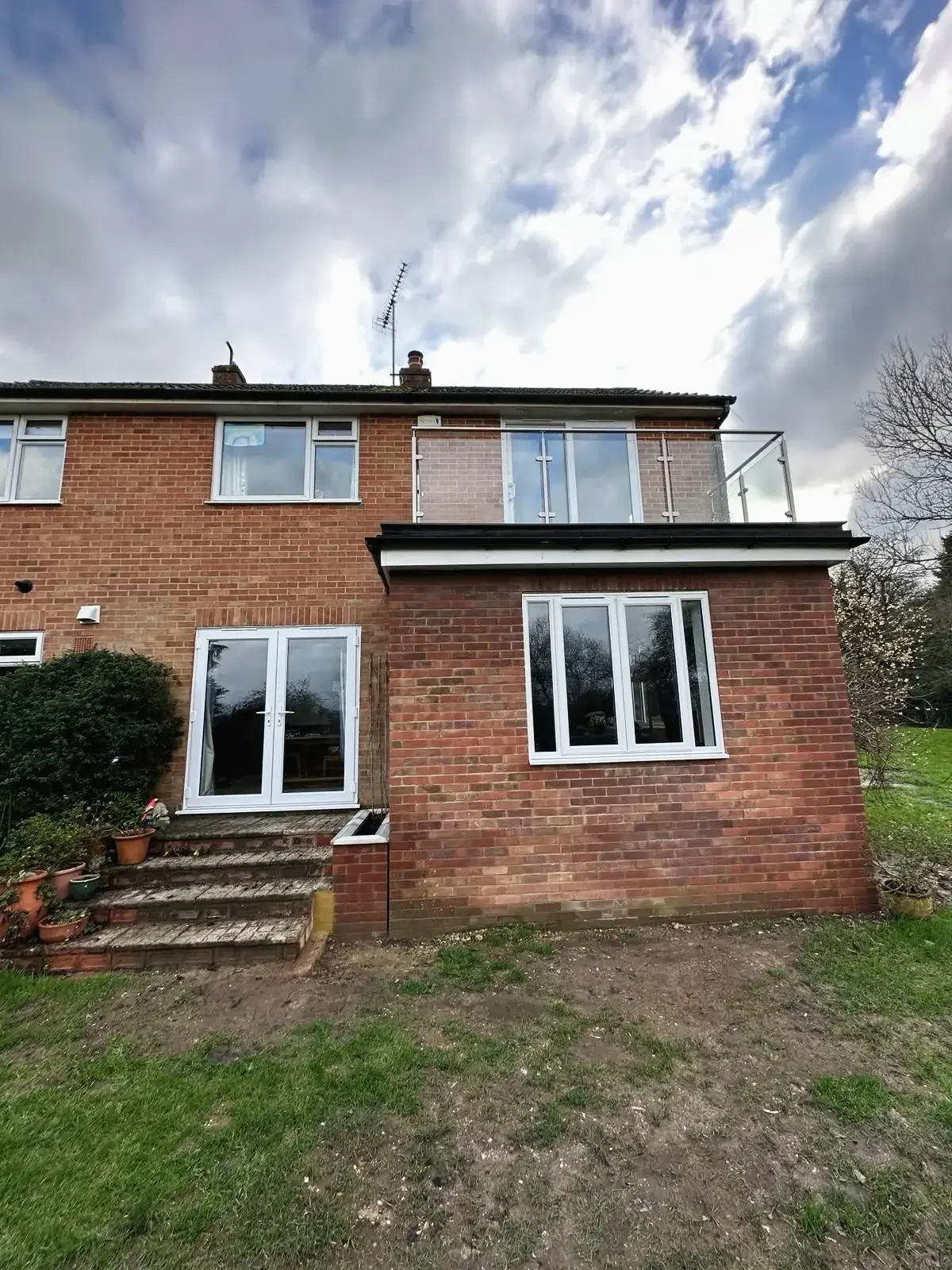
Older houses often have shallow foundations, and a new extension must be built to modern standards, so the foundations for an extension to a semi-detached or terraced house are usually deeper than those next door.
Work that does not need a notice
Everyday jobs are too minor to be covered. Drilling into a party wall to fix shelves or wall units, cutting in to add or replace wiring and sockets, and replastering do not normally need a notice.
How the Party Wall Process Works
Step 1: Serve notice
You give written notice to every adjoining owner, describing the work and when you intend to start. There may be more than one: neighbours on both sides or to the rear, and, where a neighbouring property is let or leasehold, a freeholder as well as a long leaseholder. It is good manners, and good sense, to talk to your neighbours before a formal letter lands on the doormat.
Step 2: Your neighbour responds
An adjoining owner has 14 days to reply, and there are three possible outcomes.
- They consent in writing. The work can go ahead as described. It is still wise to record the condition of their property first.
- They dissent. This is not a refusal. It means the matter is settled by surveyors under the Act.
- They do not reply. For work to an existing party wall and for excavation, a dispute is deemed to have arisen after 14 days, and the process moves on as though they had dissented.
Step 3: Surveyors agree an award
Where there is a dispute, the two owners either agree on a single surveyor to act for both of them or appoint one each. The surveyors draw up a party wall award, a document that sets out the work that may be carried out, how and when it will be done, and any measures needed to protect the neighbouring property. It normally includes a schedule of condition, with photographs, recording the state of the neighbour’s property before work begins.
Step 4: Work begins
The notice periods are two months for work to an existing party wall, and one month for new boundary walls and excavations. The work can start sooner if your neighbour agrees in writing. A notice is only valid for a year, so do not serve it too far ahead.
Who Pays for a Party Wall Agreement?
Usually, you do. The building owner normally pays all the costs associated with drawing up the award, including the adjoining owner’s surveyor’s fees, where the work is solely for the building owner’s benefit. This is one reason a friendly conversation and an agreed single surveyor are worth having. Two surveyors cost more than one.
Allow for these fees in your budget alongside the other costs of an extension or loft conversion. Our guides to house extension costs and loft conversion costs list the other items to plan for.
How It Fits Into Your Project
The party wall process is separate from planning permission and Building Regulations approval, and having one does not give you the others. All three can run side by side.
The practical point is timing. The surveyors need to know exactly what is being built, so notices are normally served once the structural design is settled. With a notice period of up to two months, plus time for an award if one is needed, the process should begin well before your intended start date. Leaving it until the builders are booked is the most common cause of a delayed start.

Which Projects Usually Need a Notice?
- Loft conversions in semi-detached and terraced houses, where steel beams bear on the party wall.
- Rear and side extensions to attached houses, and to detached houses that stand close to their neighbours, because of the excavation rules.
- Removing a chimney breast from a party wall.
- Removing an internal wall, where the new beam rests on the party wall. See our guide to removing a load-bearing wall.
- Basements and underpinning.
A fully detached house with plenty of space around it may need no notice at all.
What Happens if You Do Not Serve Notice?
Failing to serve notice is not a criminal offence, but it leaves you exposed. Your neighbour can go to court for an injunction to stop the work, which is expensive and can halt a project with the roof off. You will also have no agreed record of the condition of their property before you started, which makes it very hard to defend yourself if they later claim your work caused damage.
The Act is there to protect both sides. It gives you the right to carry out work that affects a shared wall, and it gives your neighbour assurance about how that work will be done.
Five Ways to Keep It Neighbourly
- Talk first. Explain what you are planning, show them the drawings and listen to their concerns before any paperwork is sent.
- Give plenty of notice. People are far more accommodating when they are not being rushed.
- Suggest an agreed surveyor. One impartial surveyor acting for both owners is quicker and cheaper.
- Record the condition of their property even if they consent. It protects you both.
- Tell them what to expect. Working hours, deliveries, scaffolding and the noisy days are easier to live with when they are not a surprise.
How Godman Construction Can Help
We are builders, not party wall surveyors, but we can tell you at the outset whether your project is likely to need party wall notices, so they can be served in good time, and we carry out the work in line with whatever is agreed.
Godman Construction provides an end-to-end service for house extensions and loft and garage conversions across Surrey and Hampshire. If you are planning a project and want to understand everything it will involve, get in touch or request a free, no-obligation quote.
For the official explanation of the Act, see the government’s explanatory booklet.
Frequently Asked Questions
Do I need a party wall agreement for an extension?
Often, yes. If you are building up to the boundary, or digging foundations within three metres of a neighbour’s building and deeper than their foundations, you must serve notice. Most extensions to semi-detached and terraced houses are covered.
Do I need a party wall agreement for a loft conversion?
If you share a wall with a neighbour and the new beams will rest on it, yes. You must give at least two months’ notice.
How much notice do I have to give?
At least two months for work to an existing party wall, and at least one month for a new wall at the boundary or for excavation.
Can my neighbour stop my extension?
Not through the Party Wall Act. A neighbour can dissent, which means surveyors set the terms on which the work is carried out, but the Act does not let them veto work you are otherwise entitled to do. Objections to the principle of an extension belong to the planning process.
Who pays the surveyors?
Normally the person having the work done pays for the award, including the neighbour’s surveyor’s fees.